The Great Smoky Mountains: A Complete Guide to America's Most Visited National Park (and Where to Stay Around It)
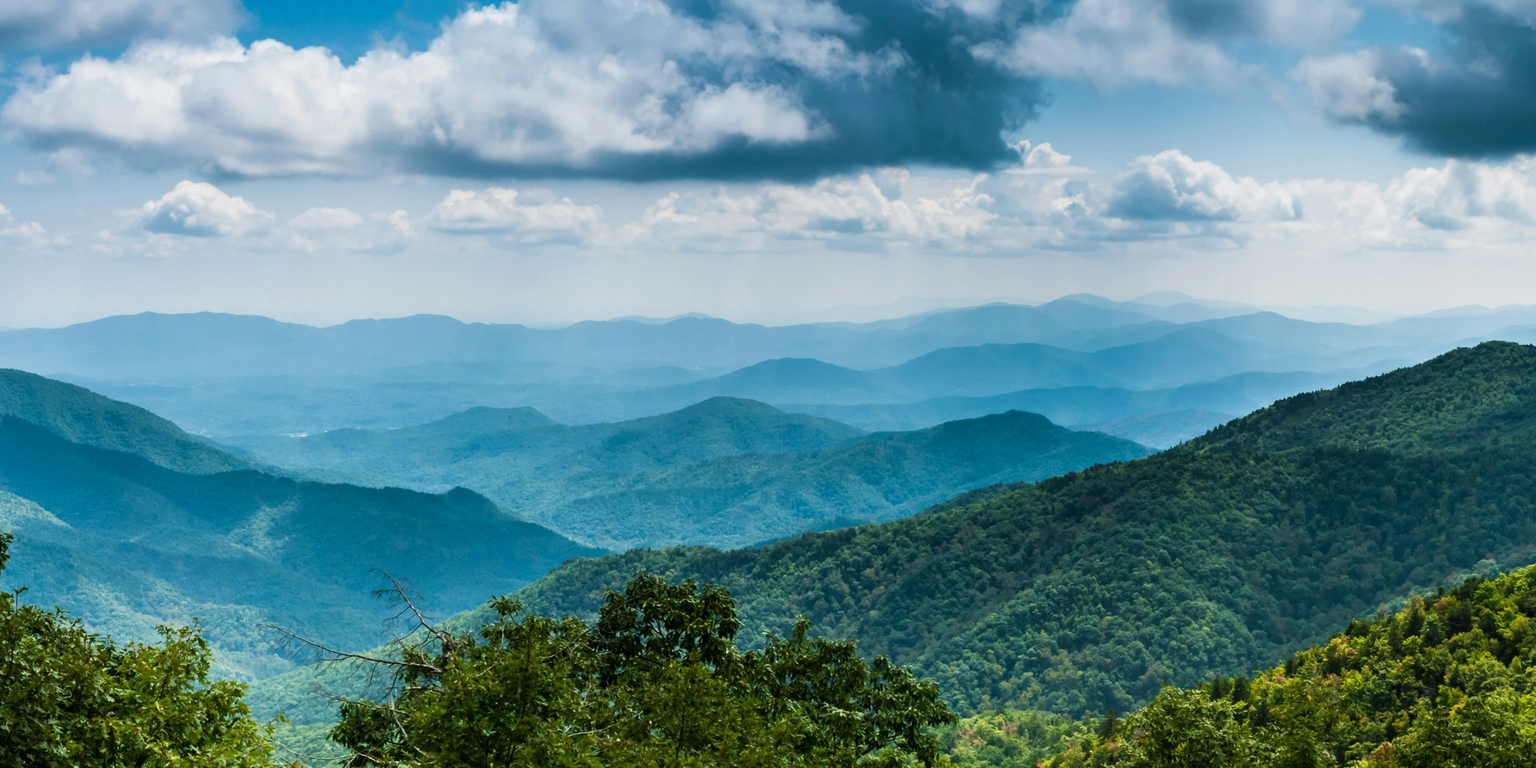
Covering 522,000 acres, The Great Smoky Mountains National Park is one of America’s signature parks. The Smokies personifies what Senator Howard Baker said when he called it “...a land of high hills, deep hollows and deep convictions.” Combining spectacular nature and Appalachian charm, the misty blue ridgelines are home to one of the most biodiverse areas in North America.
It’s a year-round destination that attracted 11.5 million visitors in 2025. Part of it is the nature, but another part of it is how accessible the Smokies are: the park is free to enter, and two-thirds of the U.S. population can reach the area within a day’s drive.
The Smokies region is not a singular destination with one base. The park straddles eastern Tennessee and western North Carolina, the differences personified in the gateway towns that circle the park. This Great Smoky Mountains National Park guide will cover the park in every season plus provide insight into its towns with honest advice about whether or not it’s for you.
Understanding the Geography: The Lay of the Land

The Great Smoky Mountains National Park straddles the Tennessee-North Carolina state line, and the park is almost evenly divided between the two.
The Tennessee Side
The Tennessee side is vacation-oriented, so decidedly larger and more raucous. Gatlinburg and Pigeon Forge are strip malls after cabins followed by attractions until you reach the national park limits.
Popular gateway towns here include Gatlinburg, Pigeon Forge, Sevierville and Townsend. Pigeon Forge lies about halfway in between Sevierville and Gatlinburg, roughly an hour southeast of Knoxville.
The Carolina Side
The Carolina side feels more Appalachian with a focus on the outdoors. Hiking, fly-fishing, watersports and high-elevation wilderness on offer, but there is still enough food, art and mountain culture to fill your afternoons. You’ll find quiet mountain towns here, anchored by Cherokee, which also serves as the eastern gateway to the park; Bryson City and Maggie Valley have strong vacation rental inventories if you’re after a mountain escape without the touristy gimmicks.
The question travelers should ask themselves when booking a Smoky Mountains vacation rental isn’t Gatlinburg vs Pigeon Forge. It’s the type of vacation they want.
Tennessee gives you the Smokies with a side of entertainment and vacation infrastructure; North Carolina gives you the Smokies with a stronger sense of place, wilderness and small-town Appalachia.
Key distances
Gatlinburg to Pigeon Forge is an 8-minute trip, and from Pigeon Forge to Sevierville, it’s 12 minutes. Townsend sits west of Gatlinburg, about 25 minutes away, and provides the quietest park access on the Tennessee side.
You can reach Cherokee from Gatlinburg through the park on Newfound Gap Road that sits right on the border. It’s 32 miles and about an hour if you drive straight through (but it’s truly spectacular, so allow more time for stops). Bryson City is about 75 miles from Gatlinburg.
Great Smoky Mountains National Park: What to Know Before You Go

The Great Smoky Mountains National Park was established in 1934 and is now one of the largest protected areas in the United States.
Grandeur is far from overstated in the Smokies. Hazy mountain peaks, some of the tallest in North America, give way to deep valleys, towering waterfalls and dense hardwood forests.
Traverse more than 800 miles of trails, many that follow the 2,900 miles of streams past waterfalls and mid-19th Century homesteads. As you climb in elevation, the spruce fir forests, a relic of the ice ages, emit the blue-tinged smoke that gives the region its name. The “smoke” isn't smoke at all. It's the blue-gray haze created when moisture and natural organic compounds released by the dense forests scatter light across the mountains.
Its diverse ecosystem, lauded as a UNESCO Biosphere Reserve, is home to the most diverse salamander population outside the tropics reside here, and the densest black bear population in the Eastern U.S.
Dolly Parton, Sevierville’s own and an ambassador to the Smokies, once said, “We got the most radiant flowers, the biggest assortment of trees. The Smokies have a heart of their own. It’s the way the water flows, the way it sounds, and the way it feels when you get into it.”
Mic drop.
Great Smoky Mountains National Park guide and basics
Cost: No reservation is required for most access, making it one of the few parks of its size to offer a cost-free experience.
Parking: A parking tag is required for all vehicles staying more than 15 minutes in the park. The cost is moderate (Daily $5, Weekly $15, Annual $40). You can purchase a tag online with shipping or printing options, or from pay machines at the visitor’s centers. Display your tag on the lower passenger side dashboard at all times.
Popular trails and sites get congested. Arrive before 8 a.m. to a trailhead or scenic overlook, and always check the NPS website for news about weather or construction, as well as alternative routes and parking spots.
Crowds: Cades Cove, Newfound Gap, and major waterfall trailheads can reach gridlock on summer and fall weekends. Venture mid-week or arrive before 8 a.m. The quieter sections of the park aren’t yet popular and provide the same stunning scenery, from wildflowers to peaks (and parking).
Cell Service: Spotty to nonexistent inside the park. Download offline maps before entering or pick one up at a visitors center.
Roads, Mountain Driving and Altitude: Always check the NPS website, as closures for inclement weather happen often; summer afternoons have frequent thunderstorms and winter weather can close high mountain passes. Most roads are well-maintained and practically beg you to slow down.
On that note, remember that some roads make substantial climbs over a short distance. While altitude sickness is not a major concern here, drinking your 64 ounces a day is recommended.
Wildlife safety: The Great Smoky Mountains is rife with wildlife. White tailed deer, elk and foxes are frequently spotted, but so are black bears. When visiting, remember that you should keep your distance, store food properly and never feed the wildlife.
The Park, by Section:
The park is divided into a dozen large sections, with three main entrances. The major visitor hubs are Sugarlands, Cades Cove, Oconaluftee and Kuwohi/Newfound Gap, with quieter areas such as Cosby, Deep Creek, Cataloochee and Fontana offering a different experience.
Tennessee Section:

Sugarlands
The main visitor center on the Tennessee side is the gateway to most of the popular trails and to Newfound Gap Road. Don’t let the crowds scare you: you can still find pockets of solitude near quiet streams and waterfalls.
Located ten minutes southwest of Gatlinburg, this classic Smokies corner is the right place for a first-time visitor who doesn’t mind sharing the trails.
Itinerary highlights:
- Chimney Tops: The Smokies at its most regal (and most crowded). Stone stairs and steep inclines reward you with sweeping views of nearby crags but enough shade to keep you cool in the summer. The round-trip hike is 3.5 miles.
- Roaring Fork Motor Nature Trail: This 5.5-mile, windy one-way trail is open to passenger vehicles only. It’s an easy drive through old-growth forest canopy, historic log buildings and easy access to several waterfall trails, including Rainbow Falls. If you only have one day to explore, this is a solid route.
- Laurel Falls Trail: Capped by an 80-foot waterfall spilling over slippery rocks, this 2.6-mile paved trail is the single busiest trail in the entire national park system. Laurel Falls is closed for reconstruction through approximately January 2027.
Cades Cove
This broad valley is ringed with peaks and has become one of the most recognizable parts of the Smokies. Wildlife lovers and photographers, this is the place.
Itinerary highlights:
- Cades Cove Historic Loop: Worth waking up early for: white-tailed deer, black bears, wild turkey and even coyotes are active on misty mornings, providing one of the most exceptional wildlife viewing opportunities in the park. The 11-mile scenic loop drive brings early Appalachian homesteads and impressive views from the valley floor. Allow at least 2-4 hours for stopoffs. Closed to vehicles every Wednesday from May through September; expect heavy traffic on weekends year-round, and all summer and fall.
- John Oliver Cabin trail: One of the oldest and best preserved homesteads is at the end of a half-mile hike. It’s also wheelchair- and stroller-friendly.
- Abrams Falls: Hike 5 miles round trip from Cades Cove along gushing creeks and over footbridges to Abrams Falls, which flows into a deep sandstone pool. This is one of the most rewarding waterfall hikes in the park, particularly in the spring to see wildflowers.
Kuwohi/Newfound Gap
At the very center of the park, both states meet at high elevation.
Itinerary highlights:
- Kuwohi (formerly Clingmans Dome): Newfound Gap sits at 5,046 feet where the Appalachian Trail crosses Newfound Gap Road, and nearby Kuwohi sits at 6,643 feet. From Highway 441, take the spur road (closed in winter), then hike a steep but paved half-mile trail to an observation tower with 360-degree views. If the weather cooperates, you can see 100 miles.
- Alum Cave Trail: 4.4 miles round trip to Alum Cave Bluffs, one of the most distinctive geological formations in the park. The full extension to LeConte Lodge (11 miles round trip) is one of the classic Smokies hikes. This is an extremely crowded trail; if you’re looking for solitude, try Andrew’s Bald or West Prong.
Metcalf Bottoms, Elkmont, Abrams and Cosby
Intrepid travelers who are willing to seek out the quiet will find them in the most remote corners of the park. Here, you can explore wildflower fields, mountain streams and the historical side of the Smokies without the crowds.
North Carolina Side:

The North Carolina Smokies make nature the centerpiece, from isolated hikes to water activities. But it’s also the hub of Appalachian and Cherokee culture, teeming with wildlife and far quieter than the Tennessee side.
Oconaluftee
The southern gateway is immediately outside Cherokee, with a broad river valley giving way to the mountains in the distance. Here is where nature and culture collide: one of the two principal elk herds descend in the early morning and afternoon, and the Eastern Band of Cherokee Indians is headquartered in town. Make visiting both the park and the historical museums part of your itinerary in Cherokee, particularly if you have history buffs or kids.
Deep Creek
The clue is in its name: Deep Creek is where you’ll find streams and cascades around every bend in the road, and most of the water-based recreation in the park is concentrated here. The nearest base is Bryson City, and it's the right choice for serious hikers, travelers staying in Bryson City and families seeking water thrills.
Cataloochee Valley
Getting to the eastern border means winding mountain roads and saying goodbye to convenience, but Cataloochee is prime wildlife viewing. The elk rut season, from September through October, is the best time to spot.
Fontana
Fontana, on the southern tip of the park, is the most isolated section and the most densely forested. If you’re seeking a serious outdoor adventure, you’ll find it here.
The Appalachian Trail follows 71 miles through the park, entering near Fontana Dam in North Carolina and exiting near Davenport Gap in Tennessee. Hiking is high elevation and requires moderate effort.
The Gateway Towns: Where to Stay and Why It Matters
With a park as extensive as the Great Smoky Mountains, where you stay is paramount and depends on your trip aims.
The quick guide:
- First visit: Gatlinburg
- Dollywood and family entertainment: Pigeon Forge
- National Park highlights: Gatlinburg or Townsend
- Large groups: Sevierville
- Quiet and wildlife over entertainment and shopping: Townsend (TN) or Maggie Valley (NC)
- Cherokee culture and park access: Cherokee
- Outdoor Adventure: Bryson City
- Smokies + Asheville and Blue Ridge Parkway: Pick Cherokee for cultural options and parkway access, Bryson City for outdoor adventure, Maggie Valley for solitude.
GATLINBURG, TN: The Classic Gateway
The Vibe: Gatlinburg is the classic “Smoky Mountain vacation” town. Downtown is walkable, where old-timey shops share a wall with bourbon distilleries, restaurants, candy shops and tourist attractions.
The greatest advantage here is proximity: the park starts where town ends, so you can walk out the door and be on a trail. Gatlinburg has three entrances and is due north of the Sugarlands Visitor Center.
What to do: Pop into stores on the pedestrian-friendly strip. Skip hiking and take the Aerial Tram to Ober Mountain (or ski its 10 runs in the winter). Ripley’s Aquarium is the most-visited attraction in Tennessee and merits a morning for families.
Who Gatlinburg is for: First-time Smokies visitors, families who want options, couples who like restaurants and attractions but want the park nearby, anyone prioritizing park access.
Who it's not for: families whose trip centers on Dollywood (pick Pigeon Forge). Budget-conscious travelers who want more cabin square footage for less money (choose Sevierville). Travelers who want quiet and solitude (Townsend is the call).
Vacation rental character: Gatlinburg is a convenience king where vacation rentals have become an industry of their own. Gatlinburg vacation rental cabins climb the hills immediately off the downtown core. The closer to downtown, the smaller the property tends to be; higher elevation cabins trade walkability for views and privacy. Expect mountain views and hot tubs in each.

Sleeps 6, indoor pool, hot tub, save $1,121 vs Airbnb
PIGEON FORGE, TN: The Entertainment Capital
The vibe: Where Gatlinburg's identity is rooted in the park, Pigeon Forge's is the full-scale entertainment industry. It's bigger, louder and more commercial than any other gateway town, but not every visitor is there for the outdoors.
The Parkway (Highway 441) is a long corridor of restaurants, go-karts, mini golf, dinner theaters, attractions, shopping and resorts, anchored by Dollywood. The theme park Dolly Parton built on the outskirts is why people come and is considered one of the best regional theme parks in the country. It’s more than just rides (even though you’ll find them here): there is live music embedded throughout the park, craft culture and a nearby waterpark.
What to do: Dollywood is obviously the draw, but you’ll find dozens of other attractions here. The drive to the Smokies is manageable, as well.
Who Pigeon Forge is for: Families with children who want maximum entertainment options within a short drive of the park, multigenerational groups seeking entertainment options on and off the mountain, and travelers who want a non-stop experience.
Who it's not for: Anyone for whom Dollywood isn’t a priority. Couples looking for a romantic mountain escape or outdoor enthusiasts who want to be close to trailheads. If mountain vacation for you means quiet, look elsewhere.
Vacation rental character: More than 14,500 lodging units make up the largest inventory in the area. Everything from modest 2-bedroom cabins to enormous 20-bedroom group lodges are found here, which also makes for strong competition for high quality and competitive pricing. You can find everything here, except for maybe rustic authenticity.

Sleeps 25, indoor pool, golf simulator, save $1,554 vs Airbnb
[For the full guide to Pigeon Forge, including where to eat, where to stay, and what to do in every season, read our complete Pigeon Forge destination guide.]
The big question when deciding on Gatlinburg vs Pigeon Forge is whether or not you’re coming for the national park, or if you’re coming for a vacation that just happens to be next to a national park.
SEVIERVILLE, TN: The Smart Base
The Vibe: Sevierville is less resort and more working town that has been grandfathered into the Smokies tourism machine. Dolly Parton’s hometown sits north of Pigeon Forge with a quaint downtown and a longer drive to the mountains that you trade for quiet. This is where repeat visitors know to stay: Smokies culture with fewer crowds make it a better all-around budget destination where a Pigeon Forge cabin rental is more affordable.
What to do: Visit the Dolly Parton statue downtown, explore the shops and restaurants downtown, shop the outlet mall or use Sevierville as a base for exploring other nearby attractions.
Who Sevierville is for: Large groups and extended families who need significant square footage or who are looking for a convenient base on the I-40 will find better budget options here. You also have the choice of Dollywood and hiking without having to prioritize one over the other.
Who it's not for: Travelers who want to walk to downtown shops and restaurants or immediate park access should not stay in Sevierville.
Vacation rental character: The best square-footage-to-dollar ratio and largest inventory (we’re talking 8 to 20+ bedrooms!) make Sevierville perfect for large groups of family reunions. Everything in the region is within 20-25 minutes.

Sleeps 20, indoor pool, hot tub, save $2,598 vs Airbnb
TOWNSEND, TN: The Peaceful Side
The vibe: Townsend calls itself "The Peaceful Side of the Smokies" and is the antidote to Gatlinburg and Pigeon Forge. There’s no neon, fewer attractions and a much stronger emphasis on the river, the forest and Appalachian heritage.
Things to do: Townsend is a strategic base for travelers who want to explore Cades Cove early (a ten-minute drive), tube or kayak the Little River, cycle around town via the Riverwalk or delve into local culture at the Great Smoky Mountains Heritage Center
The pace is slow on purpose.
Who Townsend is for: Popular with repeat visitors seeking more park than party, particularly couples, families who want river tubing and wildlife, outdoor-focused travelers for whom hiking and wildlife are the entire point of the trip. Essentially anyone who specifically wants to avoid the Pigeon Forge and Gatlinburg dynamic.
Who it's not for: Families whose trip centers on Dollywood or the Parkway entertainment complex (25 minutes) or who need plenty of rainy-day options. Anyone seeking a walkable downtown scene.
Vacation rental character: Despite its smaller size, there is a strong inventory of charming Smoky Mountain cabin rental and riverside properties. Booking early is essential for fall weekends.

Sleeps 4, hot tub, fireplace, save $648 vs Airbnb
The Carolina side
CHEROKEE, NC: The Cultural and Natural Gateway
The Vibe: Cherokee is fundamentally different from the Tennessee gateway towns because this is the home of the Eastern Band of Cherokee Indians, not simply a tourism town built around the national park. It combines outdoor recreation with Indigenous history, art, culture and contemporary attractions.
Things to do: The Museum of the Cherokee Indian is one of the finest tribal museums in the country, and you can combine it with the Oconaluftee Indian Village to witness 18th-century Cherokee life. Harrah's Cherokee Casino gives the town an unexpected economic motor. The natural backdrop is the same national park, experienced from a quieter and less commercial direction.
Cherokee also anchors the southern end of the Blue Ridge Parkway Smokies, which begins just outside town and runs northeast through the Appalachians. This is also the prime place to see elk or hike and fish, and driving trips are jaw-dropping from the valley.
Who Cherokee is for: The outdoorsy who want national park access with significantly less commercial development, plus travelers interested in Native American culture and history or who want to access the Blue Ridge Parkway.
Who it's not for: Travelers wanting the Gatlinburg or Pigeon Forge entertainment ecosystem (the drive is an hour or more).
Vacation rental character: The Qualla Boundary's development restrictions mean the surrounding landscape feels more remote, so you’ll get more land and privacy here. Cherokee’s rental market is a cheeky blend of retro motels, campgrounds, cabins and Harrah’s.
BRYSON CITY, NC: The Outdoor Adventure Capital
The vibe: Nationally known as the “Outdoor Adventure Capital of the Smokies,” Bryson City is the strongest small mountain town on the list. Its downtown is stocked with independent restaurants, breweries and shops, while the outdoor gateway has landscapes anchored by waterfalls, hiking and mountain biking.
What to do: This is the base for outdoor enthusiasts. You can ride the Great Smoky Mountains Railroad, hike Deep Creek, go whitewater rafting on the Nantahala, mountain bike at Tsali, explore Fontana Lake and wander downtown.
Bryson City is the right call for travelers who want the Smokies experience centered on outdoor adventure rather than theme parks and dinner shows. The national park is accessible, the rivers are the main event, and the town has enough restaurants and a craft beer scene (Nantahala Brewing Company is an institution) to anchor evenings after full outdoor days.
Who Bryson City is for: Outdoorsy couples and families, paddlers, anglers, hikers, cyclists and travelers who want a genuine small-town base. This is where to stay if you’re considering a trip to Asheville, approximately 1.5 hours east.
Who it's not for: Families or groups that want the full range of entertainment and activities.
Vacation rental character: We predict this is where the Smokies rental market is headed: outdoor experience meets independent town meets cozy cabin stay. For its size, Bryson City offers a strong inventory of mountain cabins and riverfront properties that pair peace with a vibrant downtown. Properties range from secluded mountain cabins to downtown cottages within a half-mile of the center of town.

Sleeps 8, mountain views, hot tub, save $601 vs Airbnb
MAGGIE VALLEY, NC: The Quiet North Carolina Alternative
The Vibe: Maggie Valley sits in a narrow valley surrounded by mountain terrain, about 15 miles east of Cherokee and 45 minutes from Asheville. It offers a distinctly retro, quieter version of the North Carolina Smokies experience.
Things to do: Hike and drive through the surrounding mountains and visit Cataloochee Valley, both excellent for wildlife sightings. Explore Wheels Through Time Museum or ski at Cataloochee Ski Area in winter. Maggie Valley also makes a sound base for exploring the Blue Ridge Parkway and nearby Waynesville; don’t miss Waterrock Knob, one of the most dramatic viewpoints on the Parkway.
If you’re a biker, Maggie Valley is a great jumping off point for trips on the hog.
Who Maggie Valley is for: Travelers who simply want to be in the mountains; Cataloochee Valley in fall is extraordinary. Maggie Valley is also right for those looking for easy access to both the Smokies and Asheville and the Blue Ridge Parkway.
Who it's not for: Travelers who want significant dining and entertainment options.
Vacation rental character: There’s a smaller inventory here, but a strong selection of private mountain cabins with acreage and views. Options here are geographically dispersed but range from villas to RVs.
The Seasons: When to Go and What to Expect

The Great Smoky Mountains National Park is a year-round destination, but you could have very different experiences across seasons.
Spring in the Great Smoky Mountains (March through May):
Spring is one of the Smokies' best-kept secrets.
More than 1,500 species of flowering plants bloom across the park, with wildflowers beginning at lower elevations in late March and progressing up the mountains through June. Waterfalls are particularly impressive as spring rain and snowmelt swell the streams, temperatures are generally cool to mild and crowds remain manageable.
The synchronized fireflies at Elkmont are the season's extraordinary finale: thousands of Photinus carolinus flash in unison for roughly two weeks. The event requires a lottery and permit, and typically sells out within minutes. Plan well ahead.
Spring is for travelers who want hiking, waterfalls and wildflowers without fall's crowds or prices. For vacation rentals, you can generally be more spontaneous than in peak seasons, although the firefly event and spring break weekends can drive demand.
Summer in the Great Smoky Mountains (June through August):
The park is at its lushest and busiest in the summer. Forests are intensely green, streams and waterfalls are lively and park wildlife is biologically active.
Valley temperatures can become hot and humid, making the higher elevations particularly appealing: Kuwohi's summit sits 6,643 feet above sea level and can be 10–15°F cooler than the valleys.
Weekends bring heavy traffic, especially around July 4 and throughout August, so early starts and weekday visits make a significant difference. Outside the park, the gateway towns are in full vacation mode, with Dollywood's summer calendar, outdoor entertainment, water attractions and festivals operating at full speed.
For rental guests, this is a season to prioritize location and amenities: a cabin with a pool, hot tub or easy access to town can be as valuable as proximity to a trailhead.
Fall in the Great Smoky Mountains (October through November)
Fall is showstopper season in the Smokies, and it’s peak season.
Smoky Mountains fall foliage is a slow rollout, beginning at the highest elevations in late September and gradually cascading downhill over four to six weeks; upper ridges typically peak around mid-October and lower elevations following into late October and early November
The North Carolina-based Cataloochee Valley adds another seasonal draw: elk rut season, generally September through October, is when males bugle and compete for mates in a 200-member strong herd.
Gatlinburg and the other gateway towns are pumping. This is when vacation-rental planning matters most: book three to four months ahead for prime weekends, and consider a weekday or early-November stay if you want color but not crowds. Expect premium rates for location + mountain views.
Winter in the Great Smoky Mountains (December through February)
Winter is the Smokies' quietest and most underrated season. Snow isn't guaranteed and rarely reaches the lower elevations, the mountains can look spectacular while Gatlinburg, Pigeon Forge and the other gateway towns remain accessible.
Crowds drop dramatically after Thanksgiving, making popular trails, scenic drives and overlooks much easier to enjoy. Winter also offers excellent wildlife viewing in places such as Cades Cove because bare trees improve visibility; don't expect guaranteed bear sightings, however, as many bears are denning.
Kuwohi Road closes for the winter, and high-elevation access is limited across the park. Meanwhile, Gatlinburg and Pigeon Forge lean into Christmas with elaborate lights and holiday programming.
January and February offer the best combination of low crowds and rental value, making winter particularly attractive to travelers who care more about hiking, scenery, food and a cozy Smoky mountains cabin rental than a packed activity calendar.


